Camper Van Standard Electrical System
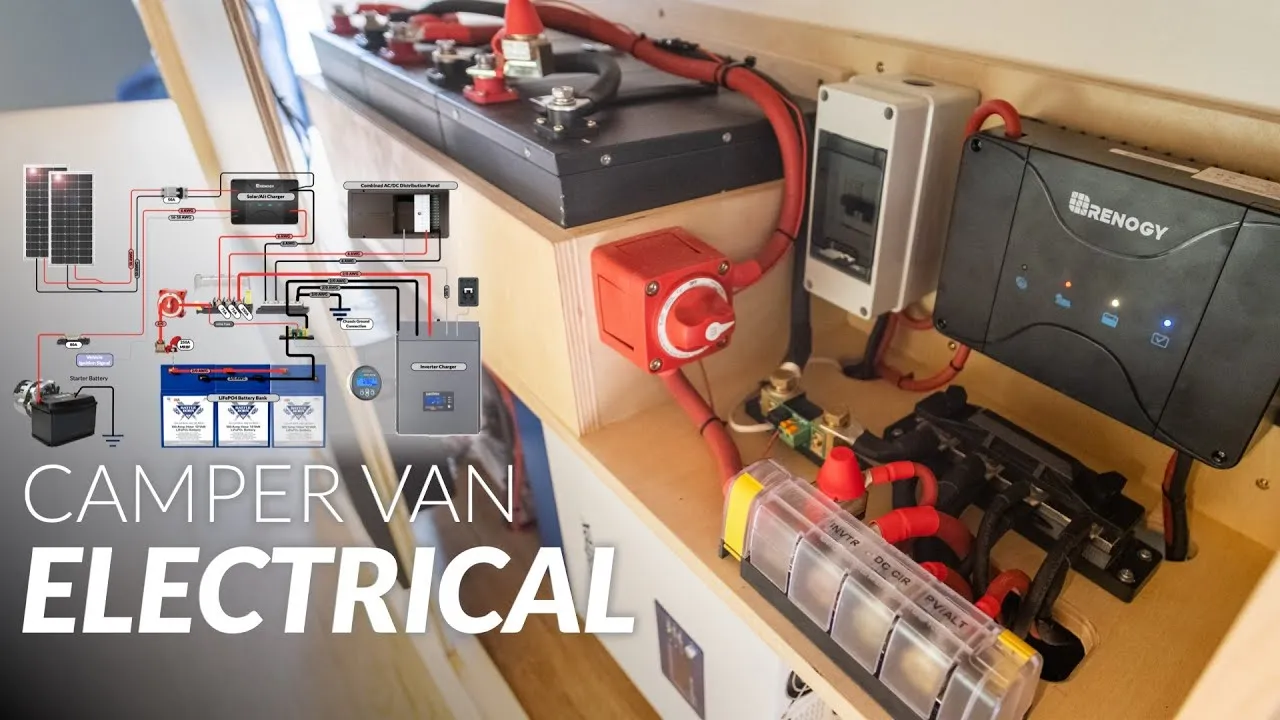
A mid-size camper van electrical system with a 200Ah+ LiFePO4 bank, 2000W inverter/charger, up to 660W of solar and shore power. Install video and full parts list.
What you’ll need
Some part links are affiliate links. I earn from qualifying purchases, at no extra cost to you.
Updated since the video
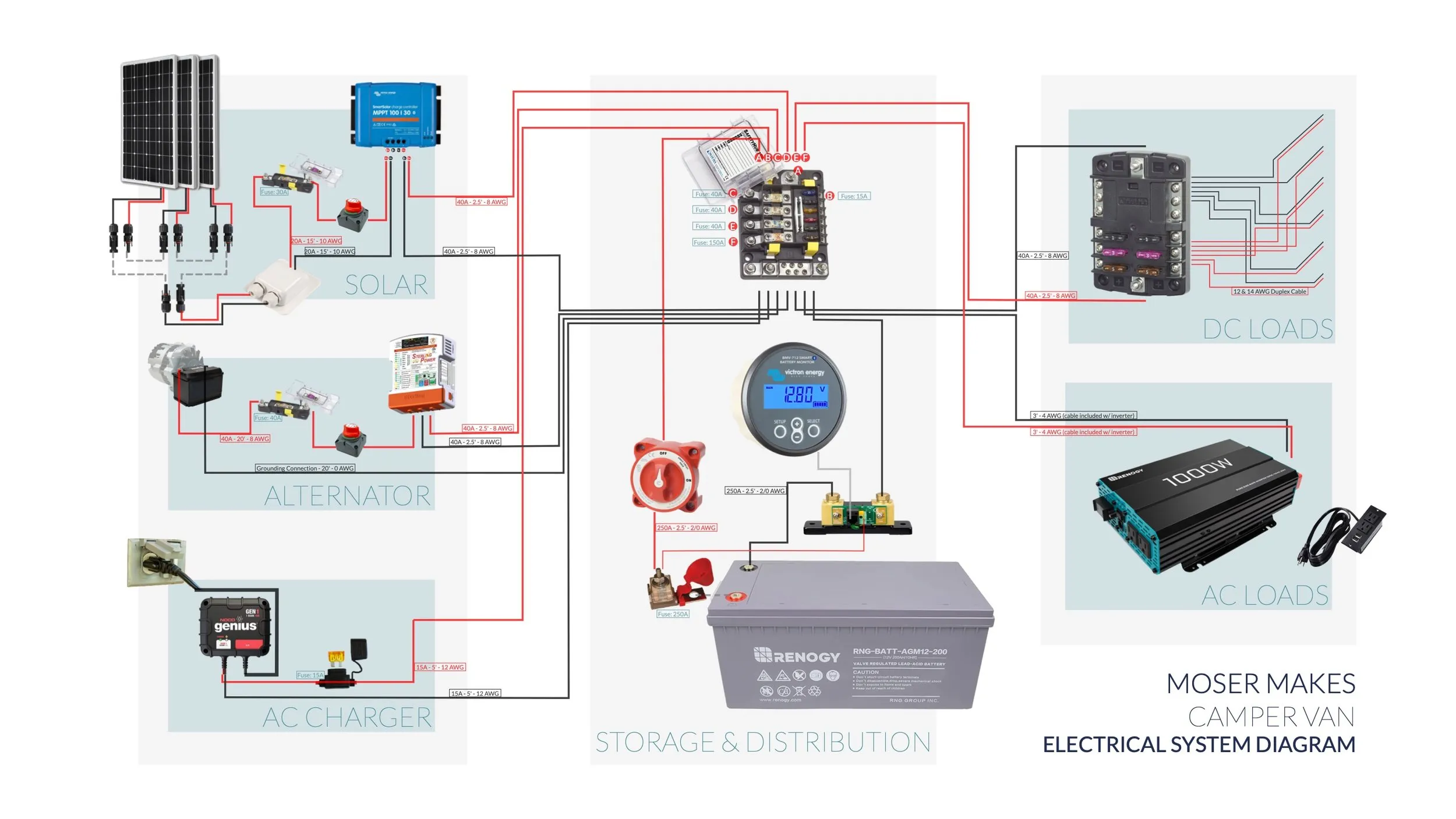
The parts list now uses a Victron MultiPlus 12|2000|80 inverter/charger instead of the Xantrex Freedom XC 2000 in the video. The Victron is now the cheaper option for a 2000W inverter/charger. This is my current recommendation. The wiring is the same either way, so the wiring diagram still shows the Xantrex.
About the parts list
The batteries are the biggest cost in this system by far. The list doesn’t name a battery on purpose: pick LiFePO4 batteries that fit your budget and space, with at least 200Ah in total for the 2000W inverter, and size the bank to your daily use. Shop around and watch for deals.
Solar panels are up to you too: pick panels that fit your roof, up to 660W in total.
Check the maximum solar input voltage before you decide how to wire the panels. The original Renogy DCC50S limited solar input to 25V, which meant the panels had to be wired in parallel. Renogy has since raised that to 50V, so some panels can now be connected in series. Look up the manual or spec sheet for the exact unit you’re buying and verify its maximum solar input voltage before you size the array.
The main AC breaker and branch breakers go in the AC side of the distribution panel; pick branch breakers to match the circuits you’re running.
Keep exploring
Tutorial Camper Van Budget Electrical System
The simple electrical system from my 2019 Ford Transit build, with a 200Ah battery, 1000W inverter, 440W of solar and 30A alternator charging. Free wiring diagram and parts list.
Tutorial Camper Van High Power Electrical System
A high power camper van electrical system with a 300Ah+ LiFePO4 bank, 3000W inverter/charger, up to 700W of solar and 50A of alternator charging. Install video and parts list.
Video How to Design a Camper Van Electrical System/Charge Sources for Off-Grid Camping
How to think about charge sources for an off-grid camper electrical system: solar, alternator charging and shore power.
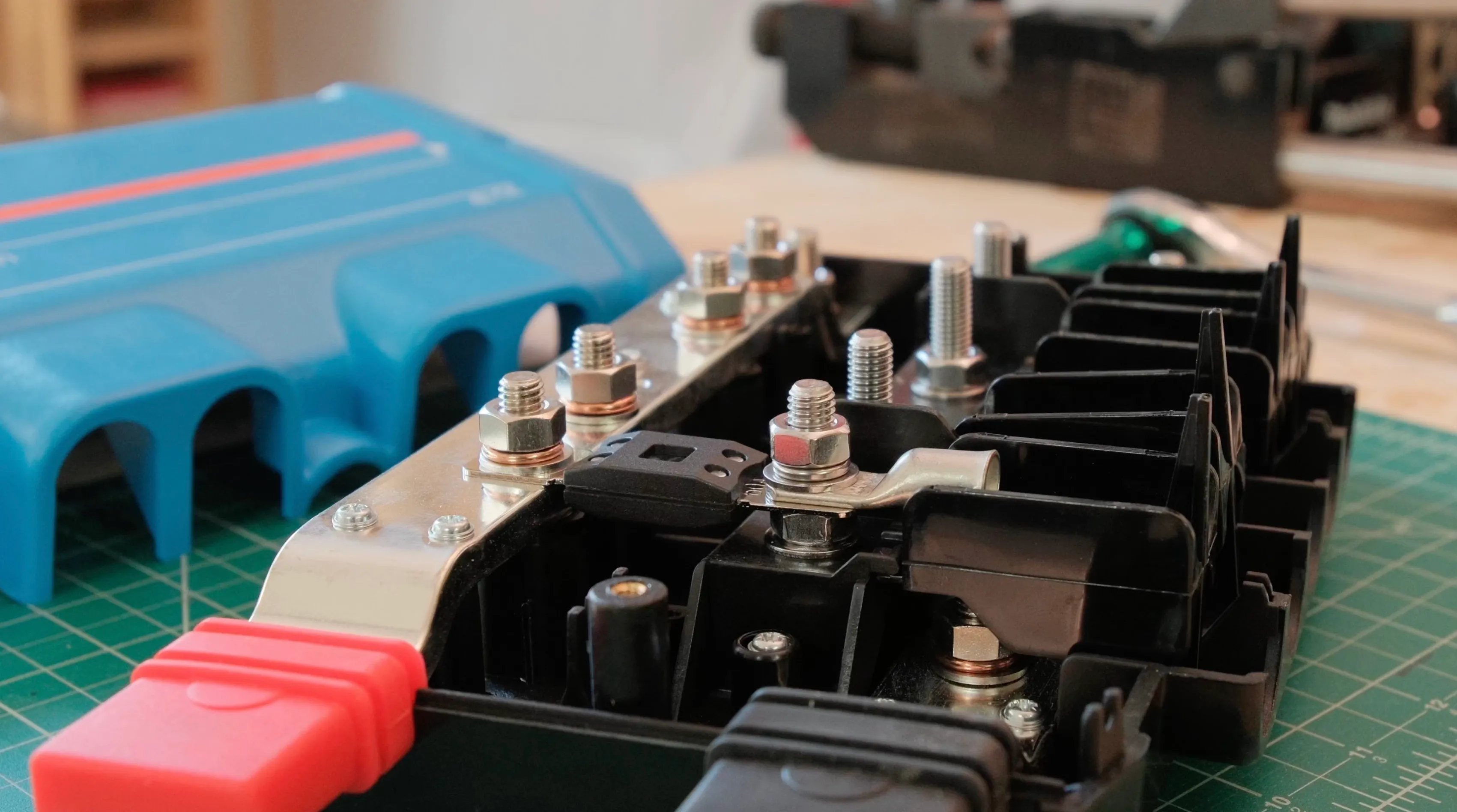
Tutorial Convert a Victron Lynx Power In to a Lynx Distributor
Add four M8 bolts to a Victron Lynx Power In so it holds MEGA fuses like a Lynx Distributor. Hardware list and step-by-step instructions.
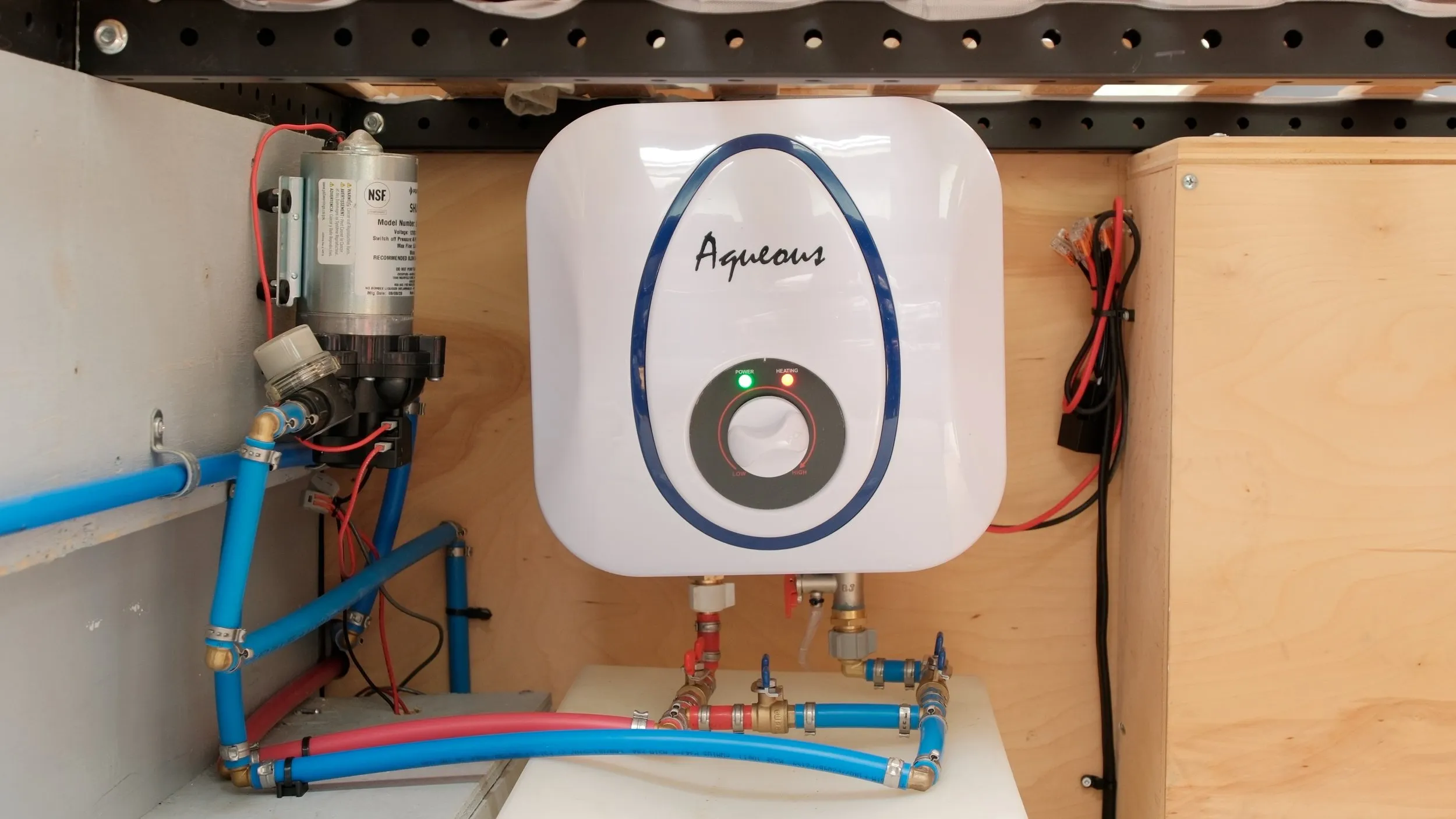
Review Aqueous 12V Water Heater Review
I tested the 6-liter Aqueous 12V water heater in a camper van. It reached 140°F in about 2 hours on 28Ah. Here's how it compares to a 120V Bosch.
Video How to Install 12V and 120V Outlets in Your Camper Van (Complete Guide)
Choosing, mounting and wiring 12V and 120V outlets in a camper van, including GFCI, box types and daisy chaining.
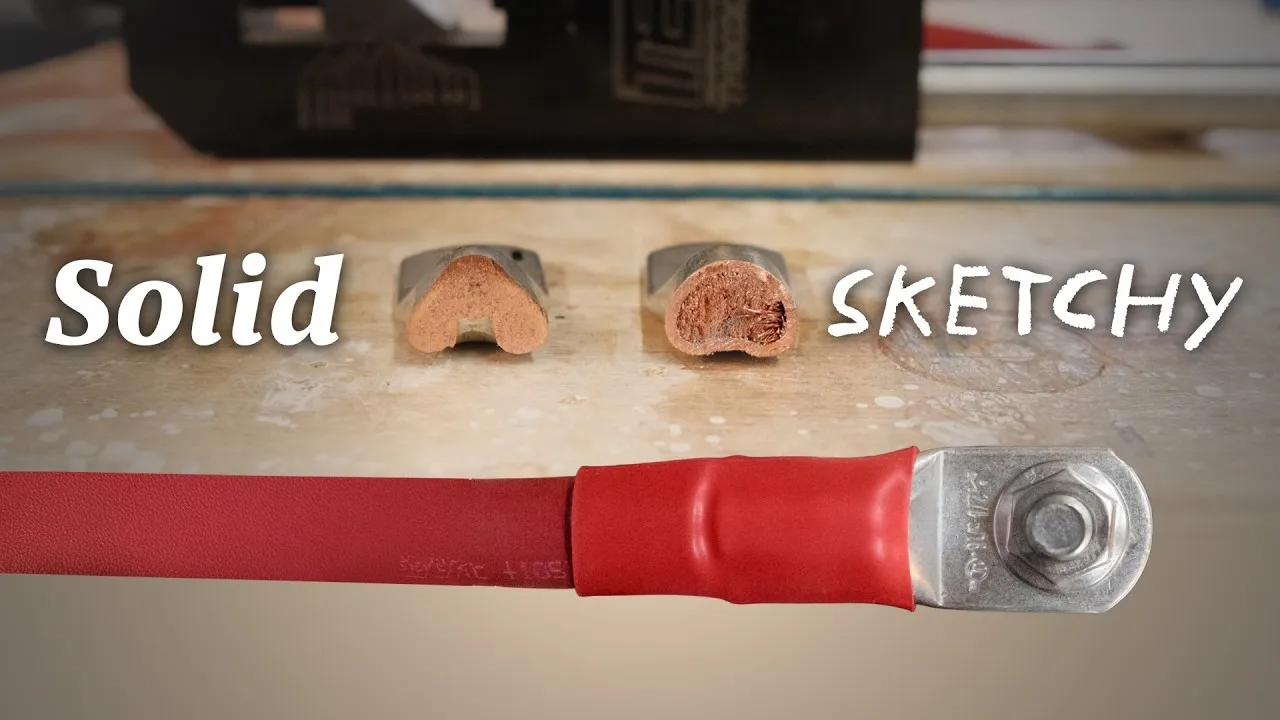
Video How to Crimp Heavy Wire Lugs the RIGHT Way (Don’t Skip This Step!)
How to crimp heavy-duty wire lugs: the tools I use, what a good crimp looks like inside, and how to test it.
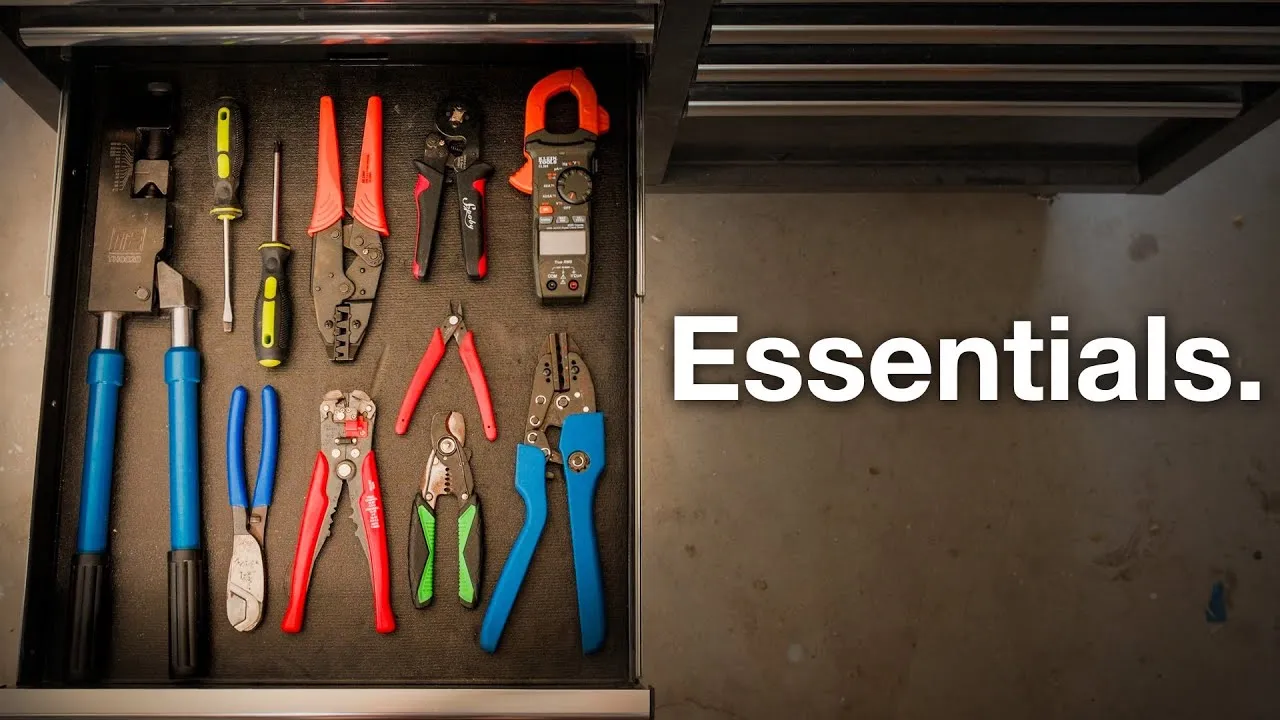
Video Electrical Tools You’ll Actually Use in a Van Build
The electrical tools I actually use in a van build, from cutting thick battery cable to crimping small connectors.